Aerea Targaryen
Fire & BloodAerea Targaryen was the elder twin daughter of Aegon the Uncrowned and Rhaena Targaryen, and for a time her claim to the Iron Throne made her more than a royal child: she was a potential successor whose safety and identity were entangled with the kingdom’s struggle over lawful rule. Declared heir by Maegor I while he awaited a son, she was later restored to her mother after years apart. Her life ended after she claimed Balerion and disappeared from Dragonstone, a journey the account ultimately connects—though not with certainty—to Valyria.
Birth, Claim, and Concealment
Aerea and her twin sister, Rhaella Targaryen, were born at Casterly Rock after their father’s defeat and death. Their birth coincided with a renewed attack on their family’s legitimacy: the High Septon denounced the girls as the offspring of incest, while their mother, Rhaena, feared that remaining within reach of Maegor would put them in danger. The maester who attended the birth recorded Rhaena’s wish to take her family across the narrow sea, but Aegon remained determined to pursue his claim.
After Aegon’s death and Rhaena’s flight to Fair Isle, she took measures to protect the twins. Aerea, as the elder daughter, could be considered her father’s heir if Aegon were recognized as king; to announce that claim, however, would expose two infants to mortal danger. Rhaena dyed their hair, changed their names, and entrusted them to powerful allies to be fostered without knowledge of their true identities. She insisted that even she should not know where the girls had been sent, so she could not betray them under torture. The precaution separated mother and daughters as thoroughly as it concealed them.
That separation did not last. At Maegor’s wedding, Queen Tyanna brought two silver-haired, purple-eyed girls before Rhaena, revealing that the twins had been found. Rhaena’s response was described as controlled and cold. In the aftermath, Maegor named Aerea his lawful heir until he should have a son, while sending Rhaella to Oldtown to be raised as a septa. In the same decree he disinherited Jaehaerys Targaryen, whose claim otherwise rested on his position as the surviving son of Aenys I. Aerea’s status was therefore a political declaration, not a settled guarantee: her place depended on Maegor’s authority and on the unresolved question of who had the right to rule.
Two Twins, One Uncertain Identity
The girls’ later histories were complicated by accounts that appear to reverse their childhood temperaments. Before the fall of Maegor, Rhaella was described as bold and willful, while Aerea was timid, fearful, and prone to tears. After Jaehaerys’s coronation, the twin who stayed at Oldtown devoted herself to prayer and study and became obedient; the girl who went to King’s Landing was lively, quick-witted, and adventurous. This reversal led to persistent suspicion that someone had switched the twins during the coronation—perhaps Rhaena or Queen Alyssa. No proof emerged, and the deception, if there was one, went unchallenged: the child known as Aerea was heir to the Iron Throne until Jaehaerys had a child of his own.
The uncertainty over identity was not merely a courtly puzzle. The names belonged to children whose prospects were shaped by their sex, age, and family connections. At Maegor’s death, both were only six. Rhaella had been promised to the Faith, and contemporaries portrayed Aerea as a timid child; Rhaena ultimately agreed that the crown should pass to her brother Jaehaerys rather than to either daughter. Aerea’s claim nevertheless remained consequential: she was a named heir in a period when competing interpretations of succession could turn a royal child into a threat.
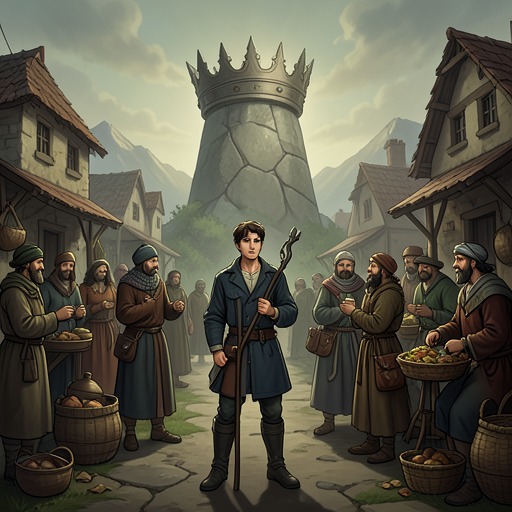
During the regency, Aerea was hidden in King’s Landing. On the night Lord Rogar Baratheon was dismissed as Hand, his men entered her chambers intending to take her with them, but found her already gone. Queen Alyssa had arranged her removal through Lord Corbray. Disguised in a common girl’s rags, with her silver-gold hair dyed brown, Aerea spent the remainder of the regency working in a stable near the King’s Gate. She was eight and loved horses; years later she recalled this period as the happiest of her life. The stable offered a striking contrast to the succession struggle that had made her vulnerable: for a time, her place in the royal line mattered less than the work and animals around her.
When Rhaena later demanded that her daughter be returned, Jaehaerys agreed. Aerea was still his acknowledged heir apparent, so the decision had consequences beyond the mother and daughter’s reunion, though those consequences were not immediately apparent. By eleven, Aerea delighted in the attention attached to being a queen-in-waiting. The birth of Jaehaerys and Alysanne’s daughter Daenerys displaced her in the succession. Rhaena did not voice her own apparent feelings about the change, but the account presents Aerea as openly displeased at losing her position.
Balerion and the Flight from Dragonstone
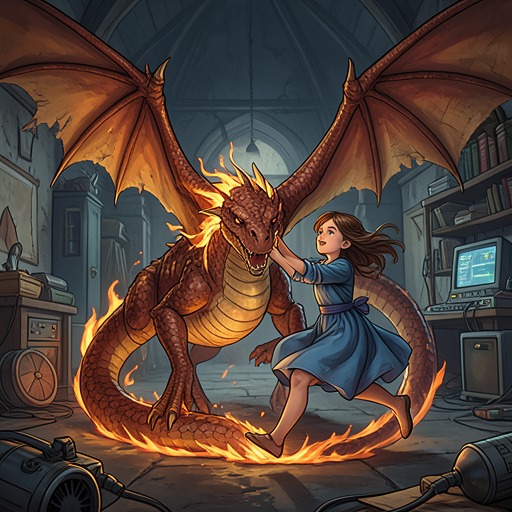
Aerea’s final flight began when she left Dragonstone at dawn and claimed Balerion, the Black Dread. Rhaena arrived soon afterward on Dreamfyre and discovered that her daughter was gone. Her alarm was sharpened by the choice of dragon: Balerion was no young, tractable mount, but the ancient dragon that had killed Aerea’s father and his dragon. Alysanne tried to calm Rhaena by reminding her that Aerea was a child, but the search began with no certainty about where she had gone.
Aerea had been heir for most of her remembered life and, according to the account, had never ridden a dragon before choosing Balerion. Her reasons remain unknown. She might have meant to reach King’s Landing, find Rhaella in Oldtown, or seek Elissa Farman, who had once promised to take her adventuring. Those possibilities belong to conjecture, not confirmed plans. The account’s central distinction is between where Aerea intended to go and where Balerion took her: the dragon’s age, strength, and willfulness made it doubtful that an inexperienced rider could direct him.
Balerion eventually returned to King’s Landing with Aerea on his back. She had been missing for months, and the girl who descended in the Red Keep’s inner ward was gravely ill and scarcely recognizable to people who had known her at court. Ser Lucamore Strong carried her to Grand Maester Benifer. The king and queen were kept from the maester’s chambers, while Septon Barth was admitted to administer the rites for the dying. Benifer’s treatment failed, and Barth soon announced Aerea’s death.
Death and the Limits of the Record
The public account gave fever as the cause of Aerea’s death. Barth’s private record, written after her death, makes clear that the explanation concealed the extraordinary nature of her illness. He and Benifer agreed not to tell the king, queen, Aerea’s mother, or even the archmaesters everything they had witnessed. Barth described a condition unlike any fever he had seen and recorded that Aerea had spoken, contrary to what the court was told. The decision to suppress details leaves the reader with both an official explanation and a deliberately withheld account, rather than a complete medical answer.
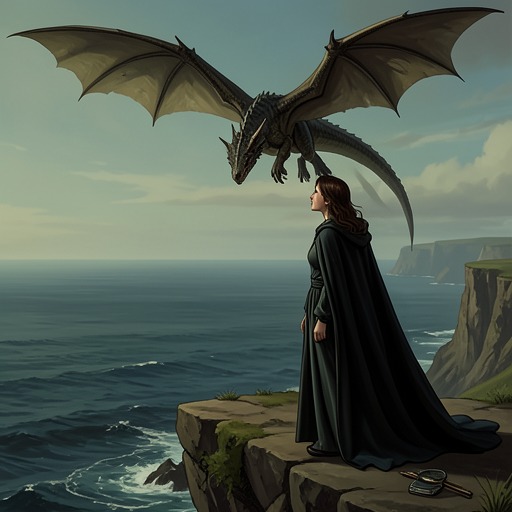
Barth’s later explanation for the journey is explicitly an inference. He reasoned that the question should not be where Aerea had taken Balerion, but where Balerion had taken her. The dragon was the oldest and largest of Aegon’s three conquest dragons, and, aside from tales he dismissed as unreliable, perhaps the only living creature to have known Valyria before the Doom. Barth concluded that Balerion had carried Aerea there and that she lacked the knowledge and strength of will to turn him aside. The book offers this as the only answer that seemed to fit the evidence, not as a witnessed certainty; Aerea never survived to explain her route.
Her death closes a story in which public status repeatedly failed to secure personal safety. Aerea was proclaimed heir, hidden under another identity, recovered by her mother, and displaced by a new royal birth, yet none of those changes gave her control over the dragon she chose. The uncertain twin-switch story and the sealed account of her last illness preserve two different gaps in what can be known about her. Her brief return on Balerion resolved the search for the missing princess, but not the mystery of her journey or the full nature of what happened to her.